Learn the rules.
Choose your risk.
The late-2011 world you remember, with another player around the next corner. Prepare in guarded areas, decide what to carry and make every trip into danger a choice.
BEFORE YOU LEAVE SAFETY
Know what you take into danger.
- Your first hour
- 60 minutes of active-play PvP protection. It pauses while logged out or AFK and ends permanently if you confirm an attack on another player.
- Your bank
- No bank raiding. Store the valuables you do not need before leaving a guarded or Safe area.
- Your carried gear
- PvP death puts carried and equipped items at risk. Active Protect Item keeps one eligible item. Check Items Kept on Death before a trip.
- Your opponent
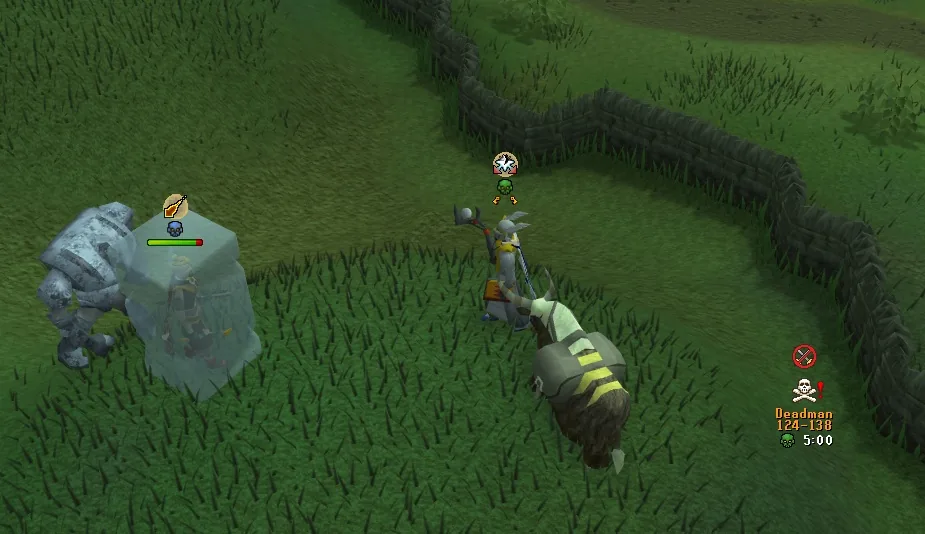
- Read your Deadman HUD for the allowed combat range and watch for multicombat areas. Plan your route and escape before fighting.
THE SEASON PLAN
Two new beginnings every year.
78 is being developed around two seasonal resets each year. The first public season and its dates have not been announced.
Build again each season
Levels, banks, items and gold reset when a new season begins.
Keep your identity
Your account name and cosmetics carry over into the next season.
PLANNED PROGRESSION / ARMAGEDDON
A quicker path to your next fight.
The chosen model is OSRS Deadman: Armageddon: 10× skilling XP and 10–15× combat XP. These are the planned seasonal rates; 78’s current development build uses different XP rules.
| Combat level | Combat XP | Skilling XP |
|---|---|---|
| 3–50 | 10× | 10× |
| 51–70 | 10× | 10× |
| 71–90 | 15× | 10× |
| 91–110 | 15× | 10× |
| 111–126 | 15× | 10× |
The rules for levels above 126 and for Summoning are still being finalised. Use the Deadman HUD to check who you can fight in 78. Read the original Armageddon model →
Know where you stand
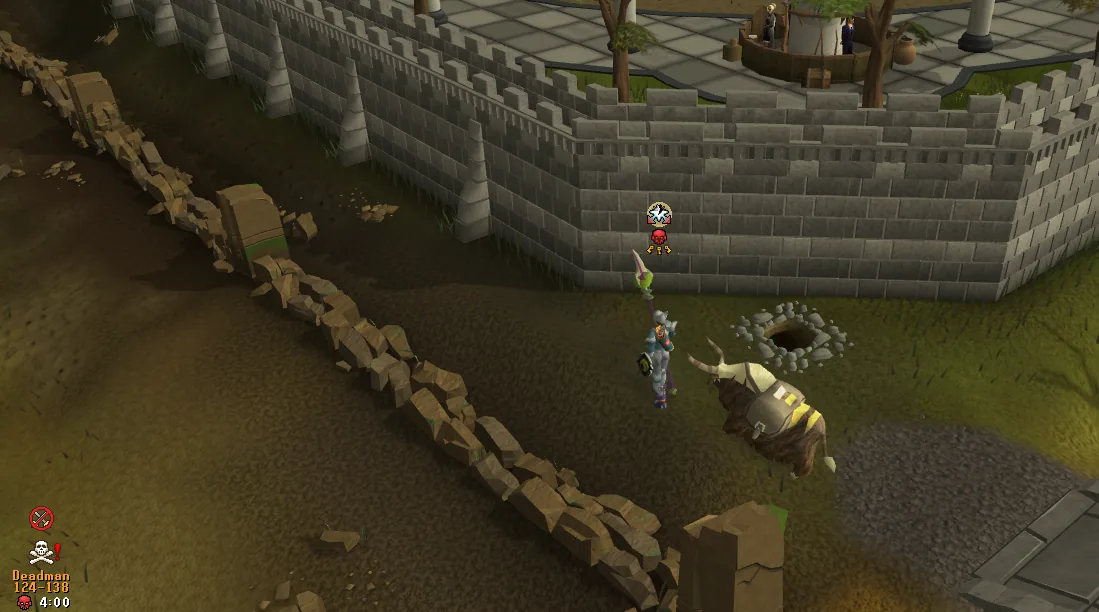
Guarded cities and Safe areas give you a place to prepare. Dangerous areas allow PvP when beginner protection and combat-range rules permit it. Check the world map and your Deadman HUD before taking a route into danger.
Carry what you are willing to risk
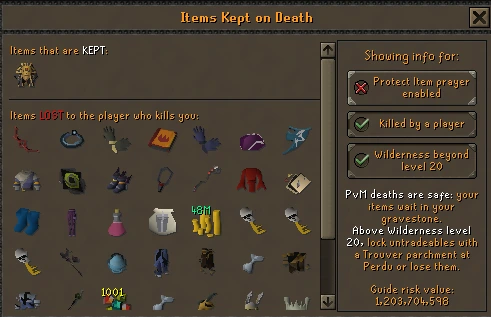
On a PvP death, your carried and equipped items are at risk whether you are skulled or not. Active Protect Item keeps one eligible item. Loot keys, looting bags and Deadman emblems are never protected.
Read your opponent’s range
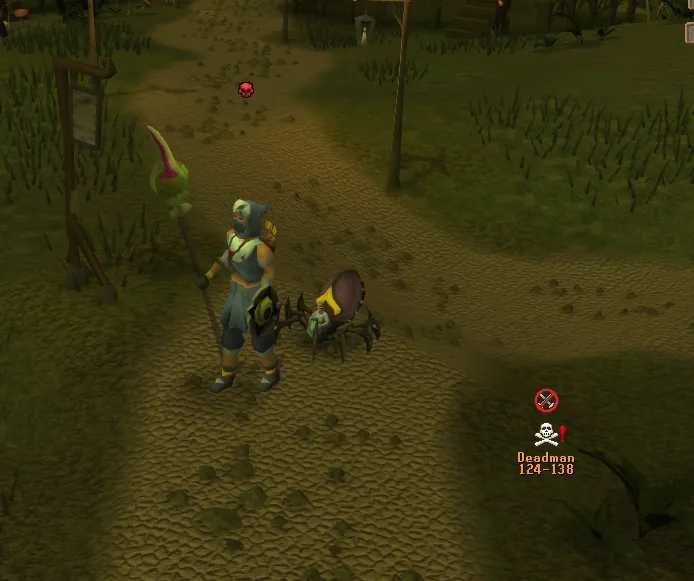
The Deadman HUD shows the combat levels you can fight. Check that range before choosing an opponent, and watch for multicombat areas where more players can join the fight.
Have an exit before you need one
Teleporting and logging out can be delayed or blocked while skulled or after combat. Do not count on an instant escape. Choose your route and watch the in-game countdowns and messages.
Your bank is not the prize
78 does not use bank raiding. Items stored in your bank are separate from what you carry into a fight. Bank your valuables before heading into a dangerous area.
Know the difference when you die
Ordinary PvM losses use gravestone and Death’s Office recovery. Loot keys are removed and the looting bag itself is destroyed; its contents go into recovery. PvP loot follows the killer’s loot rules, with special handling for items that break or convert. A monster finishing you off after recent player combat can still count as a PvP death. Check Items Kept on Death before a trip.
BEFORE YOUR FIRST FIGHT
Start with a plan. Build from there.
- Get the client. Download the Windows ZIP, extract the whole folder and open
Play 78.bat. Java is included. - Learn your surroundings. Find the bank, check your HUD and identify the boundary between guarded and dangerous areas.
- Prepare for your first trip. Bank the valuables you do not need, choose your equipment and plan a way back before leaving safety.